DJI Zenmuse L2 Lidar

DJI Zenmuse L2 3D Lidar

DJI Zenmuse L2 aerial LiDAR with 4/3 CMOS 20 MP RGB camera: 4 cm vertical and 5 cm horizontal accuracy at 150 m, up to 1.2 million pts/s, 5 returns. For Matrice 350 RTK, Matrice 400 and 300 RTK, processed in DJI Terra. Setup and training by DroneBase.
Zenmuse L2
Zenmuse L2
Zenmuse L2
Zenmuse L2
Zenmuse L2
Zenmuse L2
Zenmuse L2
From 13.199,00 € VAT incl.
Invoicing available at check-out
DJI Zenmuse L2
Item not available in stock Buy it now and receive it in 15/30 days
Yours from 291,89 €/month with Grenke Operating Lease
VAT-FREE
Tax-Free Shopping For EU businesses registered in VIES
↗
Talk to an expert Dedicated technical consultant — Mon–Fri 9:00 AM–6:00 PM
Call
Register now → ACCESS DISCOUNTS
Register now and get exclusive discounts on all products. Reserved prices are visible only to registered users.
Access the Reserved Pricing
LiDAR Payload · Survey and mapping by DroneBaseDJI Zenmuse L2 LiDAR

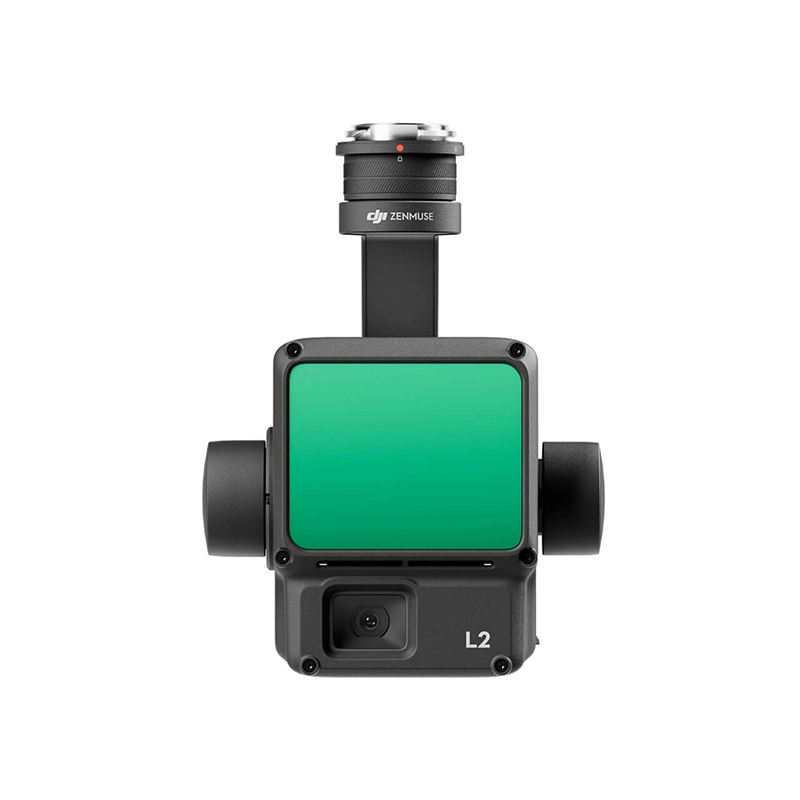
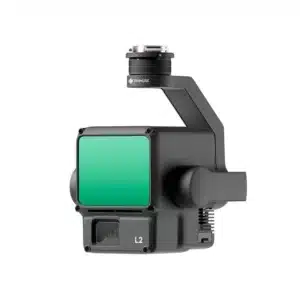
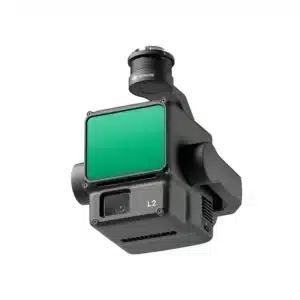
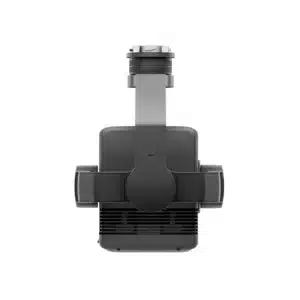
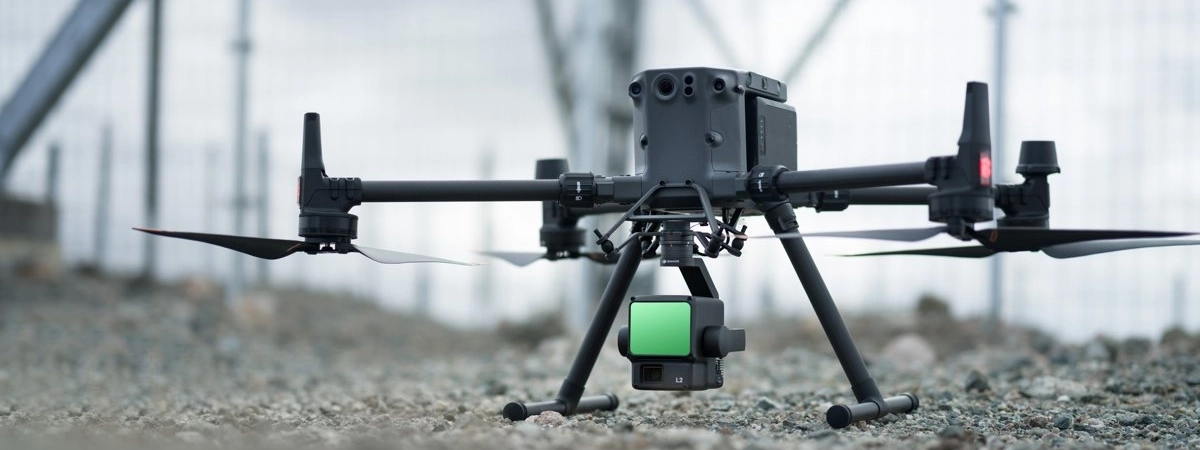
The DJI Zenmuse L2 is a survey-grade aerial LiDAR payload that combines a frame-based LiDAR, a DJI high-accuracy IMU and a 4/3 CMOS 20 MP RGB mapping camera in a 905 g unit. With the Matrice 350 RTK and DJI Terra it delivers 4 cm vertical and 5 cm horizontal accuracy at 150 m, up to 1.2 million points per second and five returns per pulse.

DroneBase supplies the complete survey kit: aircraft, L2, RTK base, DJI Terra, setup, accuracy check and operator training.

Ask for a Zenmuse L2 survey kit quote →
4 cmVertical accuracy @150 m 5 cmHorizontal accuracy @150 m 450 mRange @50% reflectivity 1.2M pts/sPoint rate, multi-return
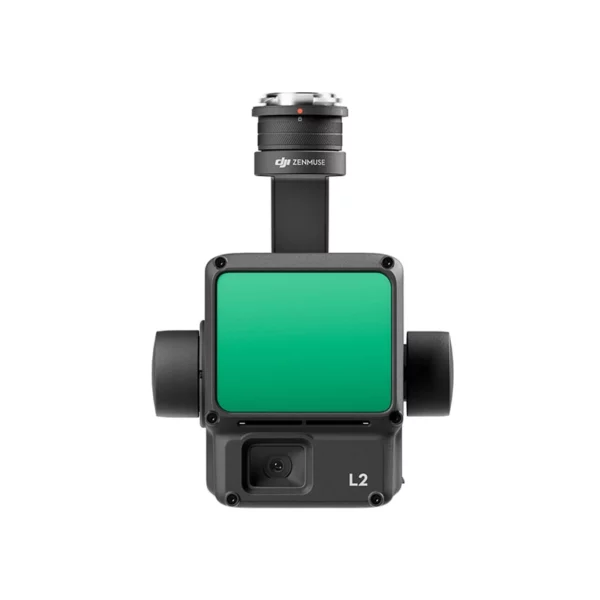
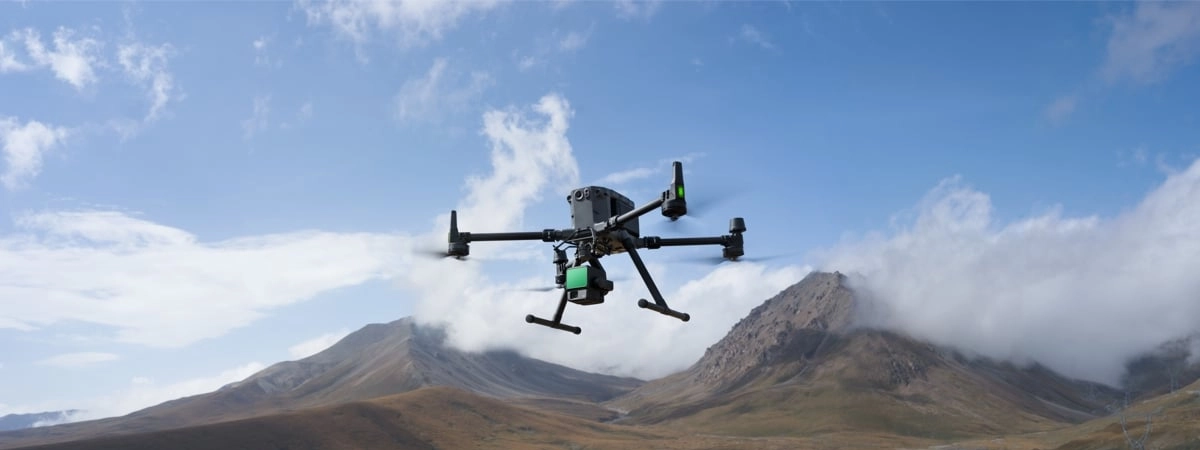
DJI Zenmuse L2 LiDAR payload with integrated RGB mapping camera
DroneBase System Integrator

DJI Zenmuse L2: a LiDAR payload is only as good as the workflow around it

The accuracy on the DJI Zenmuse L2 spec sheet depends on conditions you must reproduce in the field: RTK FIX, IMU calibration, the right scanning mode and DJI Terra processing. DroneBase configures the whole chain so your deliverables match the numbers you paid for.
1. Project scopingDeliverables, accuracy, area and vegetation decide whether L2, L3 or photogrammetry fits
2. Hardware and licencesMatrice 350 RTK or Matrice 400, Zenmuse L2, RTK base station and DJI Terra, supplied by an authorised DJI Enterprise dealer
3. Setup and accuracy checkFirmware, RTK/NTRIP, Pilot 2 mission templates and a checkpoint test of the first point cloud
4. Training and supportEASA operator training, LiDAR mission planning and DJI Terra processing
DJI Zenmuse L2 frame-based LiDAR scanning terrain
FRAME-BASED LIDARSmaller spots, denser point clouds

905 nm laser, 4×12 cm spot size at 100 m, five returns per pulse and a 240 kHz pulse rate. The small footprint and multiple returns let the Zenmuse L2 reach ground points under vegetation and resolve thin structures more cleanly.

DJI Zenmuse L2 4/3 CMOS RGB mapping camera
4/3 CMOS RGB CAMERATrue-colour point clouds in the same flight

The integrated 20 MP 4/3 CMOS mapping camera with mechanical shutter captures RGB imagery while the LiDAR scans, so DJI Terra can colourise the point cloud and you can produce imagery-based outputs from the same mission.

Why choose it

Key advantages of the Zenmuse L2 LiDAR

One payload, one SKYPORT connector, one processing software: that integration makes the L2 practical for survey teams who need repeatable results.

Survey-grade accuracy4 cm vertical and 5 cm horizontal at 150 m under DJI test conditions, with ranging accuracy of 2 cm at 150 m (RMS 1σ)
2.5 km² per flightDJI states that LiDAR and RGB data can be collected over 2.5 km² in a single flight with the Matrice 350 RTK
Five returns per pulseUp to 240,000 pts/s single return and 1,200,000 pts/s with multiple returns, for ground modelling under canopy
IMU ready at power-onDJI’s in-house IMU is ready as soon as the payload is powered, with RTK FIX positioning of 1 cm + 1 ppm horizontal
Point cloud LiveViewReal-time point cloud in DJI Pilot 2, coloured by reflectivity, height, distance or RGB
IP54, -20 °C to 50 °CDust and splash protection for field work
PROCESSING WORKFLOW

From flight to deliverable: the Zenmuse L2 and DJI Terra workflow

The L2 records point clouds, photos, IMU, GNSS and calibration files to microSD. DJI Terra, the supported post-processing software, turns them into survey outputs.

Step 1 · Capture

Fly with DJI Pilot 2

Plan an Area Route with IMU calibration, confirm RTK FIX and watch the live point cloud. Pilot 2 also generates a route quality report after the mission.

Step 2 · Point cloud

Trajectory and accuracy optimisation

DJI Terra solves the trajectory, applies Optimize Point Cloud Accuracy and generates a standard-format point cloud with one click. Exports include LAS, PLY, PCD, PNTS and S3MB.

Step 3 · Terrain

Ground classification and DEM

Terra classifies ground points and builds a digital elevation model, the basis for contours, volumes and terrain analysis in your GIS or CAD software.

Step 4 · Quality control

Accuracy inspection

Terra includes accuracy control and inspection functions, so you can compare the result with checkpoints before delivery. DroneBase helps you set up a checkpoint routine for the first projects.

Accuracy explained

Zenmuse L2 accuracy: what the 4 cm / 5 cm figures mean

DJI publishes the Zenmuse L2 accuracy of 5 cm horizontal and 4 cm vertical at 150 m with the test conditions below. Reproduce them to meet tolerance.

Aircraft and positioning
Matrice 350 RTK with RTK in FIX status
Route settings
DJI Pilot 2 Area Route, Calibrate IMU on, repetitive scanning
Flight parameters
150 m relative altitude, 15 m/s, gimbal -90°, straight segments under 1,500 m
Targets
Angular features and exposed hard-ground checkpoints
Processing
DJI Terra with Optimize Point Cloud Accuracy enabled
Without optimisation
4 cm vertical, 8 cm horizontal

Vegetation, dark surfaces and weak RTK degrade results: for contract work, report error measured on independent checkpoints, not the datasheet value.

Planning tips

How to plan a Zenmuse L2 mission

DJI’s published parameters plus general LiDAR practice. Final settings depend on your deliverable and site.

AltitudeDJI cites typical altitude up to 120 m and specifies accuracy at 150 m. Fly lower for denser clouds and thin targets
Scanning modeRepetitive mode (70°×3°) is the mode DJI uses for its accuracy figures; non-repetitive mode (70°×75°) covers more vertical detail such as facades and structures
Line overlapGeneral guidance: plan side overlap so every area is seen by at least two lines; increase it over dense vegetation or complex relief
Straight lines, IMU calibrationKeep IMU calibration enabled and avoid very long straight segments: DJI’s accuracy test kept them under 1,500 m
RTK and checkpointsFly in RTK FIX (network or own base) and measure checkpoints on hard surfaces
StorageUse microSD cards with 50 MB/s sequential write or faster, UHS-I Speed Grade 3, up to 256 GB
Comparison

Zenmuse L2 vs L3: which DJI LiDAR fits your projects

The DJI Zenmuse L3 is DJI’s long-range LiDAR for the Matrice 400. Figures are from DJI’s official specs; the accuracy values are measured at different altitudes.

Specification Zenmuse L2 Zenmuse L3
Compatible aircraft Matrice 400, Matrice 350 RTK, Matrice 300 RTK (with DJI RC Plus) Matrice 400 (single gimbal connector required)
Weight 905 ± 5 g 1.60 kg (plus 145 g connector)
Laser wavelength 905 nm 1535 nm
Detection range 250 m @10% (100 klx); 450 m @50% (0 klx) 700 m @10% (350 kHz); 950 m @10% (100 kHz); 2,000 m @80% (100 kHz)
Max returns 5 Up to 16
Pulse / point rate 240 kHz; 240,000 pts/s single, 1,200,000 pts/s multiple returns 100, 350, 1,000 or 2,000 kHz
FOV 70°×3° repetitive; 70°×75° non-repetitive 80°×3° linear; 80°×80° star-shaped and non-repetitive
Ranging accuracy 2 cm @150 m (RMS 1σ) ±10 mm absolute; under 5 mm repeatability (1σ)
System accuracy V 4 cm / H 5 cm @150 m V 3 cm / H 4 cm @120 m; V 5 cm / H 7.5 cm @300 m
Min detection distance 3 m 10 m
RGB camera One 4/3 CMOS, 20 MP, 24 mm eq., 84° FOV Two 4/3 CMOS, 100 MP each, 28 mm eq., 107° combined horizontal FOV
Storage microSD, up to 256 GB CFexpress Type B
Ingress protection IP54 IP54

Choose the L2 if you fly a Matrice 350 RTK or 300 RTK and want a lighter, proven payload. Look at the L3 if you are moving to the Matrice 400 and need long range from higher altitudes, wire detection for power line corridors or higher-resolution RGB imagery.

Use cases

What survey teams do with the DJI Zenmuse L2

TopographyGround-classified point clouds and DEMs for contours, cross-sections and design surfaces, including terrain under vegetation
Power line corridors3D models of conductors, towers and surrounding vegetation for clearance analysis along the corridor
ForestryMulti-return data for canopy height, tree structure and terrain below the canopy
Mining and earthworksStockpile and excavation volumes, progress surveys and comparison between campaigns
BIM and constructionColoured point clouds of sites and buildings as input for as-built models and progress monitoring
Technical data

DJI Zenmuse L2 specifications

GENERAL
Dimensions155×128×176 mm (L×W×H)
Weight905 ± 5 g
Power28 W typical, 58 W max
Ingress protectionIP54
Supported aircraftMatrice 400, Matrice 350 RTK, Matrice 300 RTK (requires DJI RC Plus)
Operating temperature-20 °C to 50 °C
SYSTEM PERFORMANCE
Detection range450 m @50% reflectivity, 0 klx; 250 m @10% reflectivity, 100 klx (max 500 m)
Point cloud rate240,000 pts/s single return; 1,200,000 pts/s multiple returns
System accuracyHorizontal 5 cm, vertical 4 cm @150 m (DJI test conditions)
Real-time colouringReflectivity, height, distance, RGB
LIDAR
Ranging accuracy (RMS 1σ)2 cm @150 m
Max returns5
Scanning modesRepetitive and non-repetitive
FOVRepetitive 70° H × 3° V; non-repetitive 70° H × 75° V
Min detection range3 m
Beam divergence (FWHM)0.2 mrad H, 0.6 mrad V
Spot size (FWHM @100 m)4 cm H × 12 cm V
Laser wavelength905 nm
Pulse emission frequency240 kHz
Laser safetyClass 1 (IEC 60825-1:2014)
IMU AND POSITIONING
IMU update frequency200 Hz
Accelerometer range±6 g
Angular velocity range±300 dps
Positioning accuracy (RTK FIX)1 cm + 1 ppm horizontal; 1.5 cm + 1 ppm vertical
RGB MAPPING CAMERA
Sensor4/3 CMOS, 20 MP effective
Lens84° FOV, 24 mm equivalent, f/2.8-f/11, autofocus 1 m to ∞
ShutterMechanical 2-1/2000 s; electronic 2-1/8000 s; 200,000 shutter count
Photo size5280×3956 (4:3), JPEG or DNG (RAW)
Video4K 3840×2160 @30 fps; FHD @30 fps; H.264/H.265
GIMBAL AND STORAGE
Stabilisation3-axis, angular vibration range 0.01°
MountDetachable DJI SKYPORT
Raw data storedPhotos, IMU, point cloud, GNSS, calibration files
microSD≥50 MB/s sequential write, UHS-I Speed Grade 3, max 256 GB
SOFTWARE
Flight appDJI Pilot 2
Post-processingDJI Terra
Point cloud exportPNTS, LAS, PLY, PCD, S3MB
Complete system

What you need for a working Zenmuse L2 survey kit

This product is the Zenmuse L2 payload. A complete LiDAR survey setup also needs the items below, all available from DroneBase.

Carrier aircraft listed by DJI for the L2
Aircraft and payload as a ready LiDAR kit
RTK base where network RTK is weak or unavailable
Post-processing software for L2 point clouds
Extra battery sets for the Matrice 350 RTK
Training
EASA operator training and DJI Terra workflow course
What’s in the box

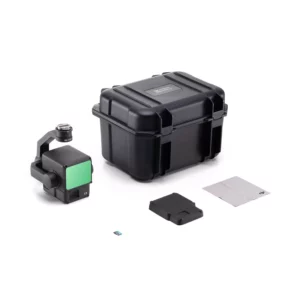
What’s included

DJI Zenmuse L2
× 1 — LiDAR payload with RGB camera
User manual
× 1 — Complete guide and quick start
microSD card
× 1 — For data storage
Connection cables
× 1 set — Drone and gimbal connections
Gimbal protection
× 1 — For transport and storage
Frequently asked questions

DJI Zenmuse L2 FAQ

How accurate is the DJI Zenmuse L2?
DJI specifies 4 cm vertical and 5 cm horizontal at 150 m with a Matrice 350 RTK in RTK FIX and DJI Terra processing with Optimize Point Cloud Accuracy enabled (4 cm / 8 cm without it). The full test conditions are listed in the accuracy section above.
Which drones are compatible with the Zenmuse L2?
DJI lists the Matrice 400, the Matrice 350 RTK and the Matrice 300 RTK, which requires the DJI RC Plus controller. The payload mounts through the DJI SKYPORT connector.
What is the difference between Zenmuse L2 and Zenmuse L3?
The L3 offers longer range, up to 16 returns and two 100 MP cameras, but flies only on the Matrice 400. The L2 is lighter at 905 g and also works on the Matrice 350 RTK and 300 RTK. See the comparison table above.
How many points per second does the L2 capture?
Up to 240,000 points per second in single-return mode and up to 1,200,000 points per second with multiple returns, with a maximum of five returns per pulse.
How much area can I cover in one flight?
DJI states that the L2 on a Matrice 350 RTK can collect LiDAR and RGB data over 2.5 km² in a single flight. Real coverage depends on altitude, overlap and terrain.
Do I need DJI Terra?
Yes. DJI Terra is the supported post-processing software for the L2, and DJI’s published accuracy figures are obtained with it. Terra is sold separately; see our DJI Terra page and ask us which licence fits your workflow.
What altitude should I fly the Zenmuse L2 at?
DJI describes typical operating altitude up to 120 m and publishes accuracy at 150 m. Fly lower for denser point clouds, within the limits of your operational category.
Can the Zenmuse L2 map terrain under vegetation?
The small spot size and up to five returns help the laser reach the ground through canopy gaps, and DJI Terra classifies ground points. Dense forest may need lower altitude and more overlap.
Does the Zenmuse L2 work in rain?
The payload is IP54 rated against dust and splashes, but rain and fog reduce LiDAR returns, so plan survey flights in dry conditions.
Which authorisations do I need for LiDAR survey flights?
It depends on the aircraft, the site and the operation. Matrice-class survey missions often fall in the EASA Specific category. DroneBase provides EASA operator training and supports the documentation for operations in Italy.
The product

DJI Zenmuse L2 LiDAR for professional survey and mapping

The DJI Zenmuse L2 is DJI’s integrated aerial LiDAR for the Matrice platform. It combines a frame-based LiDAR, a DJI IMU and a 20 MP RGB mapping camera. Under DJI test conditions the Zenmuse L2 LiDAR reaches 4 cm vertical and 5 cm horizontal accuracy at 150 m. It flies on the Matrice 350 RTK, the Matrice 400 and the Matrice 300 RTK, and its data is processed in DJI Terra into point clouds, ground classification and DEMs. For long-range projects on the Matrice 400, compare it with the Zenmuse L3; for a complete kit, see the Matrice 350 + Zenmuse L2 combo. DroneBase, an authorised DJI Enterprise dealer and ISO 9001:2015 certified system integrator based in Italy, supplies the DJI L2 LiDAR with setup, accuracy validation, training and technical support. Read more in our Zenmuse L2 guide.

DroneBase: your partner for drone LiDAR surveys

Project scoping · DJI Enterprise hardware · DJI Terra licences · Setup and accuracy check · Operator training · Technical support · Call +39 0541.1790411

Authorised DJI Enterprise dealerISO 9001:2015System IntegratorBased in ItalyEASA training


DJI Zenmuse L2

DJI Zenmuse L2 – Care 1 Year, DJI Zenmuse L2 – Care 2 Years

Brands

LiDAR Payload · Survey and mapping by DroneBaseDJI Zenmuse L2 LiDAR

The DJI Zenmuse L2 is a survey-grade aerial LiDAR payload that combines a frame-based LiDAR, a DJI high-accuracy IMU and a 4/3 CMOS 20 MP RGB mapping camera in a 905 g unit. With the Matrice 350 RTK and DJI Terra it delivers 4 cm vertical and 5 cm horizontal accuracy at 150 m, up to 1.2 million points per second and five returns per pulse.

DroneBase supplies the complete survey kit: aircraft, L2, RTK base, DJI Terra, setup, accuracy check and operator training.

Ask for a Zenmuse L2 survey kit quote →
4 cmVertical accuracy @150 m 5 cmHorizontal accuracy @150 m 450 mRange @50% reflectivity 1.2M pts/sPoint rate, multi-return
DJI Zenmuse L2 LiDAR payload with integrated RGB mapping camera
DroneBase System Integrator

DJI Zenmuse L2: a LiDAR payload is only as good as the workflow around it

The accuracy on the DJI Zenmuse L2 spec sheet depends on conditions you must reproduce in the field: RTK FIX, IMU calibration, the right scanning mode and DJI Terra processing. DroneBase configures the whole chain so your deliverables match the numbers you paid for.

1. Project scopingDeliverables, accuracy, area and vegetation decide whether L2, L3 or photogrammetry fits
2. Hardware and licencesMatrice 350 RTK or Matrice 400, Zenmuse L2, RTK base station and DJI Terra, supplied by an authorised DJI Enterprise dealer
3. Setup and accuracy checkFirmware, RTK/NTRIP, Pilot 2 mission templates and a checkpoint test of the first point cloud
4. Training and supportEASA operator training, LiDAR mission planning and DJI Terra processing
DJI Zenmuse L2 frame-based LiDAR scanning terrain
FRAME-BASED LIDARSmaller spots, denser point clouds

905 nm laser, 4×12 cm spot size at 100 m, five returns per pulse and a 240 kHz pulse rate. The small footprint and multiple returns let the Zenmuse L2 reach ground points under vegetation and resolve thin structures more cleanly.

DJI Zenmuse L2 4/3 CMOS RGB mapping camera
4/3 CMOS RGB CAMERATrue-colour point clouds in the same flight

The integrated 20 MP 4/3 CMOS mapping camera with mechanical shutter captures RGB imagery while the LiDAR scans, so DJI Terra can colourise the point cloud and you can produce imagery-based outputs from the same mission.

Why choose it

Key advantages of the Zenmuse L2 LiDAR

One payload, one SKYPORT connector, one processing software: that integration makes the L2 practical for survey teams who need repeatable results.

Survey-grade accuracy4 cm vertical and 5 cm horizontal at 150 m under DJI test conditions, with ranging accuracy of 2 cm at 150 m (RMS 1σ)
2.5 km² per flightDJI states that LiDAR and RGB data can be collected over 2.5 km² in a single flight with the Matrice 350 RTK
Five returns per pulseUp to 240,000 pts/s single return and 1,200,000 pts/s with multiple returns, for ground modelling under canopy
IMU ready at power-onDJI’s in-house IMU is ready as soon as the payload is powered, with RTK FIX positioning of 1 cm + 1 ppm horizontal
Point cloud LiveViewReal-time point cloud in DJI Pilot 2, coloured by reflectivity, height, distance or RGB
IP54, -20 °C to 50 °CDust and splash protection for field work
PROCESSING WORKFLOW

From flight to deliverable: the Zenmuse L2 and DJI Terra workflow

The L2 records point clouds, photos, IMU, GNSS and calibration files to microSD. DJI Terra, the supported post-processing software, turns them into survey outputs.

Step 1 · Capture

Fly with DJI Pilot 2

Plan an Area Route with IMU calibration, confirm RTK FIX and watch the live point cloud. Pilot 2 also generates a route quality report after the mission.

Step 2 · Point cloud

Trajectory and accuracy optimisation

DJI Terra solves the trajectory, applies Optimize Point Cloud Accuracy and generates a standard-format point cloud with one click. Exports include LAS, PLY, PCD, PNTS and S3MB.

Step 3 · Terrain

Ground classification and DEM

Terra classifies ground points and builds a digital elevation model, the basis for contours, volumes and terrain analysis in your GIS or CAD software.

Step 4 · Quality control

Accuracy inspection

Terra includes accuracy control and inspection functions, so you can compare the result with checkpoints before delivery. DroneBase helps you set up a checkpoint routine for the first projects.

Accuracy explained

Zenmuse L2 accuracy: what the 4 cm / 5 cm figures mean

DJI publishes the Zenmuse L2 accuracy of 5 cm horizontal and 4 cm vertical at 150 m with the test conditions below. Reproduce them to meet tolerance.

Aircraft and positioning
Matrice 350 RTK with RTK in FIX status
Route settings
DJI Pilot 2 Area Route, Calibrate IMU on, repetitive scanning
Flight parameters
150 m relative altitude, 15 m/s, gimbal -90°, straight segments under 1,500 m
Targets
Angular features and exposed hard-ground checkpoints
Processing
DJI Terra with Optimize Point Cloud Accuracy enabled
Without optimisation
4 cm vertical, 8 cm horizontal

Vegetation, dark surfaces and weak RTK degrade results: for contract work, report error measured on independent checkpoints, not the datasheet value.

Planning tips

How to plan a Zenmuse L2 mission

DJI’s published parameters plus general LiDAR practice. Final settings depend on your deliverable and site.

AltitudeDJI cites typical altitude up to 120 m and specifies accuracy at 150 m. Fly lower for denser clouds and thin targets
Scanning modeRepetitive mode (70°×3°) is the mode DJI uses for its accuracy figures; non-repetitive mode (70°×75°) covers more vertical detail such as facades and structures
Line overlapGeneral guidance: plan side overlap so every area is seen by at least two lines; increase it over dense vegetation or complex relief
Straight lines, IMU calibrationKeep IMU calibration enabled and avoid very long straight segments: DJI’s accuracy test kept them under 1,500 m
RTK and checkpointsFly in RTK FIX (network or own base) and measure checkpoints on hard surfaces
StorageUse microSD cards with 50 MB/s sequential write or faster, UHS-I Speed Grade 3, up to 256 GB
Comparison

Zenmuse L2 vs L3: which DJI LiDAR fits your projects

The DJI Zenmuse L3 is DJI’s long-range LiDAR for the Matrice 400. Figures are from DJI’s official specs; the accuracy values are measured at different altitudes.

Specification Zenmuse L2 Zenmuse L3
Compatible aircraft Matrice 400, Matrice 350 RTK, Matrice 300 RTK (with DJI RC Plus) Matrice 400 (single gimbal connector required)
Weight 905 ± 5 g 1.60 kg (plus 145 g connector)
Laser wavelength 905 nm 1535 nm
Detection range 250 m @10% (100 klx); 450 m @50% (0 klx) 700 m @10% (350 kHz); 950 m @10% (100 kHz); 2,000 m @80% (100 kHz)
Max returns 5 Up to 16
Pulse / point rate 240 kHz; 240,000 pts/s single, 1,200,000 pts/s multiple returns 100, 350, 1,000 or 2,000 kHz
FOV 70°×3° repetitive; 70°×75° non-repetitive 80°×3° linear; 80°×80° star-shaped and non-repetitive
Ranging accuracy 2 cm @150 m (RMS 1σ) ±10 mm absolute; under 5 mm repeatability (1σ)
System accuracy V 4 cm / H 5 cm @150 m V 3 cm / H 4 cm @120 m; V 5 cm / H 7.5 cm @300 m
Min detection distance 3 m 10 m
RGB camera One 4/3 CMOS, 20 MP, 24 mm eq., 84° FOV Two 4/3 CMOS, 100 MP each, 28 mm eq., 107° combined horizontal FOV
Storage microSD, up to 256 GB CFexpress Type B
Ingress protection IP54 IP54

Choose the L2 if you fly a Matrice 350 RTK or 300 RTK and want a lighter, proven payload. Look at the L3 if you are moving to the Matrice 400 and need long range from higher altitudes, wire detection for power line corridors or higher-resolution RGB imagery.

Use cases

What survey teams do with the DJI Zenmuse L2

TopographyGround-classified point clouds and DEMs for contours, cross-sections and design surfaces, including terrain under vegetation
Power line corridors3D models of conductors, towers and surrounding vegetation for clearance analysis along the corridor
ForestryMulti-return data for canopy height, tree structure and terrain below the canopy
Mining and earthworksStockpile and excavation volumes, progress surveys and comparison between campaigns
BIM and constructionColoured point clouds of sites and buildings as input for as-built models and progress monitoring
Technical data

DJI Zenmuse L2 specifications

GENERAL
Dimensions155×128×176 mm (L×W×H)
Weight905 ± 5 g
Power28 W typical, 58 W max
Ingress protectionIP54
Supported aircraftMatrice 400, Matrice 350 RTK, Matrice 300 RTK (requires DJI RC Plus)
Operating temperature-20 °C to 50 °C
SYSTEM PERFORMANCE
Detection range450 m @50% reflectivity, 0 klx; 250 m @10% reflectivity, 100 klx (max 500 m)
Point cloud rate240,000 pts/s single return; 1,200,000 pts/s multiple returns
System accuracyHorizontal 5 cm, vertical 4 cm @150 m (DJI test conditions)
Real-time colouringReflectivity, height, distance, RGB
LIDAR
Ranging accuracy (RMS 1σ)2 cm @150 m
Max returns5
Scanning modesRepetitive and non-repetitive
FOVRepetitive 70° H × 3° V; non-repetitive 70° H × 75° V
Min detection range3 m
Beam divergence (FWHM)0.2 mrad H, 0.6 mrad V
Spot size (FWHM @100 m)4 cm H × 12 cm V
Laser wavelength905 nm
Pulse emission frequency240 kHz
Laser safetyClass 1 (IEC 60825-1:2014)
IMU AND POSITIONING
IMU update frequency200 Hz
Accelerometer range±6 g
Angular velocity range±300 dps
Positioning accuracy (RTK FIX)1 cm + 1 ppm horizontal; 1.5 cm + 1 ppm vertical
RGB MAPPING CAMERA
Sensor4/3 CMOS, 20 MP effective
Lens84° FOV, 24 mm equivalent, f/2.8-f/11, autofocus 1 m to ∞
ShutterMechanical 2-1/2000 s; electronic 2-1/8000 s; 200,000 shutter count
Photo size5280×3956 (4:3), JPEG or DNG (RAW)
Video4K 3840×2160 @30 fps; FHD @30 fps; H.264/H.265
GIMBAL AND STORAGE
Stabilisation3-axis, angular vibration range 0.01°
MountDetachable DJI SKYPORT
Raw data storedPhotos, IMU, point cloud, GNSS, calibration files
microSD≥50 MB/s sequential write, UHS-I Speed Grade 3, max 256 GB
SOFTWARE
Flight appDJI Pilot 2
Post-processingDJI Terra
Point cloud exportPNTS, LAS, PLY, PCD, S3MB
Complete system

What you need for a working Zenmuse L2 survey kit

This product is the Zenmuse L2 payload. A complete LiDAR survey setup also needs the items below, all available from DroneBase.

Carrier aircraft listed by DJI for the L2
Aircraft and payload as a ready LiDAR kit
RTK base where network RTK is weak or unavailable
Post-processing software for L2 point clouds
Extra battery sets for the Matrice 350 RTK
Training
EASA operator training and DJI Terra workflow course
What’s in the box

What’s included

DJI Zenmuse L2
× 1 — LiDAR payload with RGB camera
User manual
× 1 — Complete guide and quick start
microSD card
× 1 — For data storage
Connection cables
× 1 set — Drone and gimbal connections
Gimbal protection
× 1 — For transport and storage
Frequently asked questions

DJI Zenmuse L2 FAQ

How accurate is the DJI Zenmuse L2?
DJI specifies 4 cm vertical and 5 cm horizontal at 150 m with a Matrice 350 RTK in RTK FIX and DJI Terra processing with Optimize Point Cloud Accuracy enabled (4 cm / 8 cm without it). The full test conditions are listed in the accuracy section above.
Which drones are compatible with the Zenmuse L2?
DJI lists the Matrice 400, the Matrice 350 RTK and the Matrice 300 RTK, which requires the DJI RC Plus controller. The payload mounts through the DJI SKYPORT connector.
What is the difference between Zenmuse L2 and Zenmuse L3?
The L3 offers longer range, up to 16 returns and two 100 MP cameras, but flies only on the Matrice 400. The L2 is lighter at 905 g and also works on the Matrice 350 RTK and 300 RTK. See the comparison table above.
How many points per second does the L2 capture?
Up to 240,000 points per second in single-return mode and up to 1,200,000 points per second with multiple returns, with a maximum of five returns per pulse.
How much area can I cover in one flight?
DJI states that the L2 on a Matrice 350 RTK can collect LiDAR and RGB data over 2.5 km² in a single flight. Real coverage depends on altitude, overlap and terrain.
Do I need DJI Terra?
Yes. DJI Terra is the supported post-processing software for the L2, and DJI’s published accuracy figures are obtained with it. Terra is sold separately; see our DJI Terra page and ask us which licence fits your workflow.
What altitude should I fly the Zenmuse L2 at?
DJI describes typical operating altitude up to 120 m and publishes accuracy at 150 m. Fly lower for denser point clouds, within the limits of your operational category.
Can the Zenmuse L2 map terrain under vegetation?
The small spot size and up to five returns help the laser reach the ground through canopy gaps, and DJI Terra classifies ground points. Dense forest may need lower altitude and more overlap.
Does the Zenmuse L2 work in rain?
The payload is IP54 rated against dust and splashes, but rain and fog reduce LiDAR returns, so plan survey flights in dry conditions.
Which authorisations do I need for LiDAR survey flights?
It depends on the aircraft, the site and the operation. Matrice-class survey missions often fall in the EASA Specific category. DroneBase provides EASA operator training and supports the documentation for operations in Italy.
The product

DJI Zenmuse L2 LiDAR for professional survey and mapping

The DJI Zenmuse L2 is DJI’s integrated aerial LiDAR for the Matrice platform. It combines a frame-based LiDAR, a DJI IMU and a 20 MP RGB mapping camera. Under DJI test conditions the Zenmuse L2 LiDAR reaches 4 cm vertical and 5 cm horizontal accuracy at 150 m. It flies on the Matrice 350 RTK, the Matrice 400 and the Matrice 300 RTK, and its data is processed in DJI Terra into point clouds, ground classification and DEMs. For long-range projects on the Matrice 400, compare it with the Zenmuse L3; for a complete kit, see the Matrice 350 + Zenmuse L2 combo. DroneBase, an authorised DJI Enterprise dealer and ISO 9001:2015 certified system integrator based in Italy, supplies the DJI L2 LiDAR with setup, accuracy validation, training and technical support. Read more in our Zenmuse L2 guide.

DroneBase: your partner for drone LiDAR surveys

Project scoping · DJI Enterprise hardware · DJI Terra licences · Setup and accuracy check · Operator training · Technical support · Call +39 0541.1790411

Authorised DJI Enterprise dealerISO 9001:2015System IntegratorBased in ItalyEASA training

Based on 0 reviews

0.0 overall
0
0
0
0
0

Be the first to review “DJI Zenmuse L2 3D Lidar”

There are no reviews yet.

Why DroneBase

The partner that neverleaves you grounded.

01 — Warranty
Official DJI Warranty
12-month full warranty on original product. Certified purchase from a DJI Gold 5 dealer.
02 — Logistics
24h Express Shipping
Orders placed by 1:00 PM ship the same day. Trackable throughout Italy. Professional packaging.
03 — Support
Dedicated Technical Support
Certified consultant assigned to your account. Unlimited pre- and post-sales support.
04 — Purchase
Free 14-Day Returns
Satisfied or refunded within 14 days of delivery. No-questions-asked policy, full refund.
Tax Incentives 2026

Buy professional drones.Recover up to 60% of your investment.

In 2026, stackable tax tools are active that significantly reduce the effective cost. Available for companies, self-employed professionals and public administration.

01 — Transition 4.0 Plan
Hyper Depreciation
Enhanced tax deduction for technologically advanced capital goods. Directly reduces the IRES/IRPEF taxable base.
+180% deduction up to €2.5M
Learn how it works →
02 — Italian Law Decree 69/2013
Nuova Sabatini
Non-repayable interest contribution on financing or leasing. Reduces credit costs to nearly zero.
Non-repayable grant Active until 2029
Check requirements →
03 — Stackability
Stackable Savings
The two instruments operate on separate levels and can be combined. On a €20,000 enterprise system you can recover up to €10,000–12,000.
50–60% recovery Stackable 2026
Request a simulation →
Technical 4.0 documentation support included. DroneBase assists you with the technical appraisal and interconnection requirements needed to access Hyper Depreciation.
Tax incentive details →
Grenke Leasing
Choose the GrenkeOperating Lease!
  1. 1Add the product to your cart
  2. 2Select Operating Lease as the purchase method
  3. 3Select the monthly payment based on your preferred term (24–60 months)
  4. 4Submit your non-binding request
  5. 5Response within 48h
Discover why leasing makes sense →

Questions about this product?

Fill out the form and one of our experts will get back to you shortly.

Request Information

Option
Privacy Policy
Newsletter

Stay up to date

DJI product news, exclusive offers and tutorials from our experts.

Certified DJI Gold Dealer and ISO 9001:2015. Enterprise drone solutions for Italian professionals.

DroneBase SRL
Via San Giovenale 86
47922 Rimini — Italy
P.IVA IT04456990409 · REA RN-413198
ISO 9001:2015 Certified
DJI Gold Dealer ★★★★★
Trustpilot 4.8/5 Based on real reviews

© 2026 DroneBase SRL — All rights reserved · P.IVA IT04456990409

Visa, Mastercard, PayPal, Bank transfer, GrenkeLeasing