DJI Delivery DJI FlyCart 30 and FlyCart 100 delivery drones
The DJI Delivery category brings together DJI FlyCart cargo drones and their accessories for transporting goods by air. FlyCart 30 carries up to 40 kg on a single battery (30 kg on dual battery) with a cargo box or a 20 m winch; FlyCart 100 reaches an 85 kg payload on dual battery, with a winch up to 30 m and a dedicated parachute kit. DroneBase configures the drone, load system and safety devices and supports you in preparing specific-category operations.
- Authorised DJI Enterprise Dealer
- ISO 9001:2015
- System Integrator
- Training and support
-
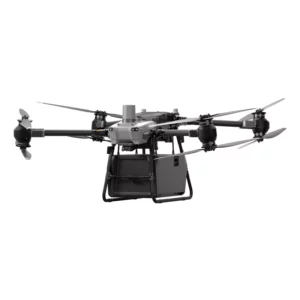
DJI FlyCart 100
✓ Ready to ship12.444,00 € TAX (22%) Includedor €275/month on lease -
DJI FlyCart 30 (No Warranty)
✓ Ready to ship19.898,20 € TAX (22%) Includedor €440/month on lease -
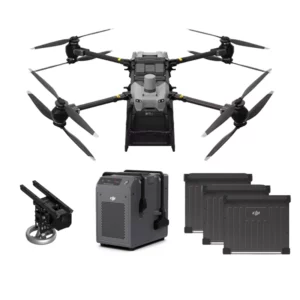
Combo Delivery FlyCart 30
✓ Ready to ship35.782,00 € TAX (22%) Includedor €791/month on lease -
Monitors & Goggles
Avatar Goggles X — HD FPV Goggles
✓ Ready to ship589,00 € TAX (22%) Included -
Batteries & Chargers
DJI Air-Cooled Heat Sink
✓ Ready to ship356,00 € TAX (22%) Included -
Batteries & Chargers
DJI Battery Incubator (21 L)
✓ Ready to ship220,00 € TAX (22%) Included -
Transport & Release
DJI Dual-Battery Lifting System
✓ Ready to ship1.609,00 € TAX (22%) Included -
DJI Accessories
DJI FlyCart 100 Fire Lance / Agras T100 - 25 mm
✓ Ready to ship4.200,00 € TAX (22%) Included -
Transport & Release
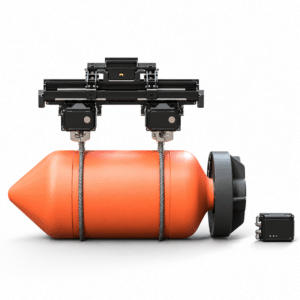
DJI FlyCart 100 Flagship Winch System
✓ Ready to ship7.224,00 € TAX (22%) Included -
Transport & Release
DJI FlyCart 30 Smart Dropping System
✓ Ready to ship4.590,00 € TAX (22%) Included -
Batteries & Chargers
DJI Intelligent Flight Battery
✓ Ready to ship2.854,00 € TAX (22%) Included -
Parachutes & Flight Terminators
DJI Parachute Kit
✓ Ready to ship2.942,00 € TAX (22%) Included -
DJI Accessories
DJI RC Plus 2 (Delivery)
✓ Ready to ship1.478,00 € TAX (22%) Included -
Monitors & Goggles
Field Commander 21" — IP67 Field Monitor
✓ Ready to ship1.782,00 €1.980,00 €TAX (22%) Included -
Batteries & Chargers
Intelligent Power Supply(EMC)
✓ Ready to ship1.664,00 € TAX (22%) Included -
Transport & Release
Smart Dropping System DJI FlyCart 100
✓ Ready to ship3.790,00 € TAX (22%) Included -
DJI Accessories
Warranty 12 months DJI FlyCart 30
✓ Ready to ship2.196,00 € TAX (22%) Included -
Parachutes & Flight Terminators
FTS Flight Terminator for DJI Flycart 30
✓ Ready to shipFrom 2.299,00 € VAT incl. -
Batteries & Chargers
DJI DB2000 Battery
✓ Ready to ship2.867,00 € TAX (22%) Included -
Batteries & Chargers
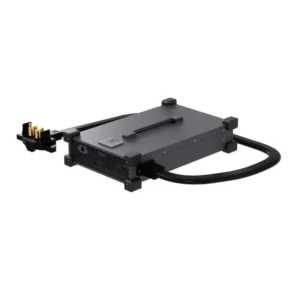
DJI C8000 Fly Cart Battery Charger
✓ Ready to ship1.195,60 € TAX (22%) Included -
Transport & Release
DJI FlyCart 30 Winch System Kit
✓ Ready to ship3.891,80 € TAX (22%) Included -
Cleaning & Spraying
Drone Cleaning System DJI Flycart 30
✓ Ready to shipFrom 8.037,00 € VAT incl. -
Tethered Systems
Tethered DJI Flycart 30 - 240m
✓ Ready to shipFrom 44.900,00 € VAT incl. -
Batteries & Chargers
DJI C12000 Intelligent Power Supply
✓ Ready to ship1.689,00 € TAX (22%) Included -
DJI Accessories
DJI FlyCart 30 Fire Lance
✓ Ready to ship4.200,00 € TAX (22%) Included -
DJI Accessories
DJI RC Plus FlyCart
✓ Ready to ship1.769,00 € TAX (22%) Included -
4G, 5G & WiFi Connectivity
DJI Cellular Dongle
Request availability164,70 € TAX (22%) Included -
Batteries & Chargers
DJI Battery Charger AC Cable
✓ Ready to ship18,30 € TAX (22%) Included -
Transport & Release
Delivery Dropping Kit DJI Flycart 30 - 10 Loads
✓ Ready to ship2.570,00 € TAX (22%) Included







DJI delivery drones: what they are and when they are needed
A delivery drone is a drone designed to carry goods from one point to another and release them in a controlled way: setting them down, lowering them with a winch or dropping them. It makes sense where the road is slow, dangerous or missing: mountain huts and high-altitude construction sites, islands and platforms, pylons and power lines, areas hit by a disaster. Each flight replaces a trip on foot, by off-road vehicle or by helicopter, with repeatable, traceable times.
DJI FlyCart drones were built for this: structure and propulsion sized for the load, obstacle sensing, two delivery modes, a parachute and mission management through the DJI DeliveryHub software platform. On this page you will find the differences between the two models, delivery accessories, cost items and the regulatory framework.
DJI FlyCart 30 and FlyCart 100 compared
| Specification (official DJI data) | DJI FlyCart 30 | DJI FlyCart 100 |
|---|---|---|
| Maximum take-off weight | 95 kg | 170 kg |
| Payload | up to 40 kg (single battery), up to 30 kg (dual battery) | up to 85 kg (dual battery) |
| Maximum range | 28 km unloaded, 16 km with 30 kg (dual battery) | 12 km on dual battery (take-off weight below 149.9 kg) |
| Hovering | 29 min unloaded, 18 min with 30 kg (dual battery) | 12 min on dual battery (same conditions) |
| Load systems | cargo box (internal space 573 × 416 × 305 mm, 0-40 kg) or winch with 20 m cable | winch with 0-30 m cable and weighing function, or lifting system with 10 m cable |
| Parachute | built-in, minimum opening height 60 m, descent up to 6 m/s | dedicated kit, minimum opening height 100 m, touchdown speed up to 7 m/s |
| Maximum horizontal speed | 20 m/s | 20 m/s |
| Wind resistance | 12 m/s | 12 m/s (take-off and landing) |
| Protection | IP55 | IP55 (excluding the propulsion system) |
| Operating temperature | -20 to 45 °C | -20 to 40 °C |
| Transmission (CE) | 8 km | 10 km (DJI O4) |
| Charging | DJI C8000 charger | DJI C12000 charger: 30 to 95% in about 9 minutes |
Figures stated by DJI in standard conditions (sea level, no wind). On a real mission, range and times depend on load, altitude, temperature and wind: that is why we size the configuration on the actual route and weight.
Which delivery drone to choose
- FlyCart 30 when the single load stays within 30-40 kg and distance matters: supplying mountain huts, mountain construction sites, deliveries between sites, islands. The cargo box protects the goods; the winch delivers without landing, for example on sloping ground or among trees.
- FlyCart 100 when you need heavier loads over short routes: materials for pylons and power lines, construction equipment, emergency supplies. The winch up to 30 m lets you deliver while staying above obstacles.
- In both cases the choice also depends on flight frequency (number of batteries and field charging capacity) and on ground risk along the route, which determines parachutes and flight termination systems.
Delivery drone accessories available in the shop
- Winches: DJI FlyCart 30 Winch System Kit and DJI FlyCart 100 Flagship Winch System, to lower the load without landing.
- Drop systems: DJI FlyCart 30 Smart Dropping System, DJI FlyCart 100 Smart Dropping System and FlyCart 30 Delivery Dropping Kit with 10 loads, to deliver several packages to different points on the same mission.
- Safety: DJI Parachute Kit for FlyCart 100 and plug-and-play MOC 2511 FTS terminator for FlyCart 30; more systems in the FTS, terminators and parachutes category.
- Smaller drones: for light loads on the DJI Matrice 350, Matrice 400, Matrice 4, Mavic 3 Enterprise and DJI Dock 3 you will find D-Boxes, dropping kits and smart winches in the Delivery System category.
Prices: how much does a DJI delivery drone cost
The cost of a drone delivery system is not the same as the aircraft price. The FlyCart 30 Delivery Combo (drone, winch system, C8000 charger, three DB2000 batteries and 12-month warranty) lists at €35,782 including VAT. For the FlyCart 100 we prepare the configuration on quotation. The items that make the cost vary:
- aircraft and load system (cargo box, winch, lifting system, dropping kit);
- number of batteries and field charging system, depending on daily flights;
- parachute, FTS systems and other mitigations required by the risk assessment;
- remote controller, connectivity and mission management software;
- pilot training, operational start-up and support.
Applications: logistics, mountain huts, offshore and emergencies
- Mountain huts and high-altitude sites: food, gas, tools and materials without a helicopter or cableway for every rotation.
- Energy networks and infrastructure: carrying equipment and components to pylons, substations and lines in rough terrain.
- Islands, ports and offshore: spare parts and documents between the mainland, ships and platforms, within range and weather limits.
- Emergencies and civil protection: supplies, equipment and medical material to areas cut off by landslides, floods or snow.
- Logistics between sites: repeated shuttles between plants or warehouses; for complete kits geared to drone logistics see the delivery combos.
Regulations: EASA specific category, SORA and PDRA
In Italy, civil drone operations follow Regulation (EU) 2019/947, applied by ENAC. DJI FlyCart drones exceed 25 kg take-off weight and carrying or dropping goods is not allowed in the open category: deliveries take place in the specific category, with an operational authorisation issued by ENAC on the basis of a SORA risk assessment or, when the mission falls within its limits, a predefined PDRA scenario. The STS-01 and STS-02 standard scenarios do not apply, as they are reserved for drones with C5 or C6 class marking.
The assessment considers the area overflown, population density, airspace, type of load and mitigations such as parachutes and flight termination. Higher-risk operations may fall into the certified category. The authorisation holder is the operator: DroneBase provides the system's technical documentation, training and support in setting up procedures.
Frequently asked questions about DJI Delivery and delivery drones
How much can a DJI delivery drone carry?
According to DJI, FlyCart 30 carries up to 40 kg on a single battery and up to 30 kg on dual battery; FlyCart 100 reaches 85 kg on dual battery. For loads of a few kilograms, smaller drones with a D-Box or dropping kit are used.
What is the range of the DJI FlyCart 30 with a load?
DJI states a 16 km maximum range with 30 kg on dual battery and 28 km unloaded. The real operating radius must be calculated on the out-and-back route, with margins for wind, altitude and temperature.
Cargo box or winch?
The cargo box protects the load and requires a landing area; the winch delivers with the drone hovering, useful on sloping ground, among trees or on structures. The choice depends on the delivery point, not just the weight.
What is the difference between FlyCart 30 and FlyCart 100?
FlyCart 30 favours distance with loads up to 30-40 kg; FlyCart 100 favours the weight carried, up to 85 kg, over shorter routes, with a winch up to 30 m and fast charging with the C12000 charger.
Is an ENAC authorisation required for drone delivery?
Yes. With a FlyCart, carrying goods takes place in the specific category and requires an operational authorisation based on SORA or, where applicable, a PDRA scenario. You also need operator registration, trained pilots and insurance cover.
Can I fly in the open category or with an STS standard scenario?
No. The open category is limited to drones under 25 kg and prohibits dropping materials; the STS-01 and STS-02 scenarios require drones with C5 or C6 class marking, which FlyCarts do not have.
Is the parachute mandatory?
It is not a general obligation, but it is often one of the mitigations the risk assessment requires when flying over areas with people or infrastructure. FlyCart 30 has it built in; for FlyCart 100 the DJI parachute kit is available.
Can medicines or dangerous goods be carried?
Medical material is carried like any authorised load. Dangerous goods require a specific assessment in the authorisation and, in the highest-risk cases, may fall into the certified category.
How much does a DJI delivery drone cost?
The FlyCart 30 Delivery Combo lists at €35,782 including VAT. The total cost depends on the load system, batteries, charging, safety devices and training: for the FlyCart 100 and custom configurations we prepare a quote.
Does DroneBase offer training and support?
Yes. We support the start-up with pilot training on the load system, delivery procedures and battery management, and we provide technical support after the drone is delivered.
Tell us about your route, load weight and flight frequency: we will propose the right FlyCart configuration and the cost items. Phone +39 0541 1790411.
Want to assess a DJI FlyCart delivery drone?
Our technicians analyse the route, loads and area overflown and propose the drone, load system and safety devices. No obligation.
- Reply within 24 working hours
- Configuration built around your operating scenario
- Quote with leasing options and incentive documentation
+39 0541 1790411